

The "Good" Child: Why Your Personality Might Be a Survival Strategy
How Growing Up With Deep Secrets Wired My Brain For Fawning—And the Scripts I Use Now To Set Boundaries

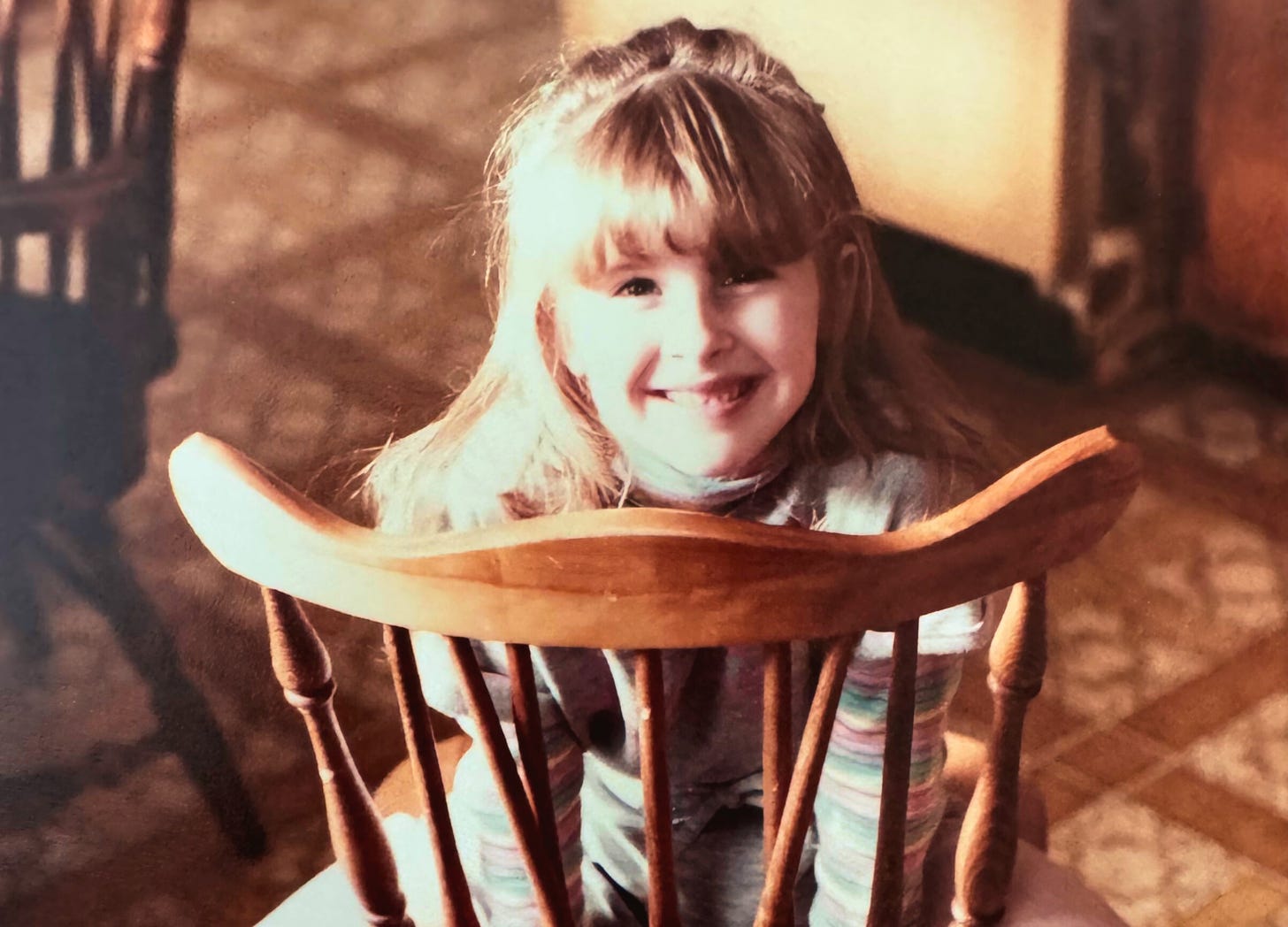
Picture of little me, age 6
In this post:
❓ Is it your personality, or is it fawning? Understanding the nervous system wiring behind being “agreeable.”
📉 The Cost of “Goodness”: Why your ability to handle everything is keeping you stuck in survival mode.
🔒 For Paid Subscribers: Your private toolkit includes 3 exact scripts to say "No" without over-explaining, plus deep-dive journal prompts to unmask your inner child.
For as long as I can remember, I was the “easy” one.
I avoided conflict at all costs, simply just going along with whatever anyone else wanted. I became a master at making everything appear perfect from the outside, curating a life that looked happy, successful, and put-together.
But my inner child held onto a silent, desperate belief:
“If everything appears perfect from the outside, then no one will ever find out about my deep, dark secrets.”
For decades, I believed this was just my personality. I thought I was just agreeable and easy to get along with.
I didn’t realize that this wasn’t a choice. It was a nervous system response.
I wasn’t just “going with the flow”- I was fawning. I became a mirror for everyone else’s emotions, while my own disappeared.
I didn’t know I was living in survival mode. I just thought this was how life felt.
I didn’t know that while I was busy trying to hold it all together, my nervous system was being re-wired.
Because the truth is: Growing up in survival mode changes you in ways that remain invisible for years.
🧠 How High-Functioning C-PTSD Reshapes Your Nervous System
(And why your “personality” might actually be a survival strategy)
Ever wonder why you look calm on the outside, but feel exhausted on the inside? Why you are the person everyone relies on, but you feel panic when you have to ask for help? Why you can manage a crisis at work perfectly, but shut down the moment you get home?
This isn’t about being a “control freak.” Or a perfectionist. Or “just anxious.”
This is what happens when your nervous system has been wired for survival for years.
🆚 PTSD vs C-PTSD - And Why They Feel So Different
Most people have heard of PTSD - usually linked with a single, life-threatening event. But Complex PTSD (C-PTSD) is different. It’s not about one big traumatic event. It’s about living in ongoing, repeated stress. The kind that happens slowly. Quietly. Over time.
📝 New to Complex PTSD? If you are just starting to explore C-PTSD and want to understand the basics & how it differs from standard PTSD, read ‘What is Complex PTSD - Why It’s So Often Missed’
Growing up in survival mode does more than leave emotional scars. It builds your brain and nervous system to expect danger all the time.
🧩 The Myth of “Falling Apart”
Here is the part that so many of us get wrong: For many of us, C-PTSD doesn’t look like “falling apart.”
✅ It looks like high achievement.
✅ It looks like extreme independence.
✅ It looks like being the “good one” or the “easy one.”
If you were a child who had to manage your parents’ emotions, or if you had to be invisible to stay safe, being “good” wasn’t a choice.
It was a survival strategy.
💡 Insight: Adaptation vs. Personality
We often confuse our survival patterns with who we really are. But these traits are often protective parts of you, working hard to keep you safe.
Fawning is Safety: You learned to read the room instantly to avoid conflict. This isn’t just empathy; it’s hypervigilance. You scan for danger so you can fix it before it touches you.
The Mask: You built a “protective part” that handles the world perfectly -smiling, working, achieving - while your inner child remains terrified of making a single mistake.
Over-independence: You learned early on that relying on adults was dangerous or disappointing. So, your nervous system decided: I will need nothing.
Caretaking is Worthiness: You learned that you were only as valuable as your usefulness. You became the family therapist or the crisis manager because having a "job" made you feel safe in a chaotic home
🔍 Everyday Examples of Survival Mode
Does this sound familiar?
The Automatic Apology: Saying “I’m sorry” automatically when someone else bumps into you. You take the blame to keep the peace.
The Over-Explain: Feeling a rush of panic when you have to say “no,” leading to a five-minute explanation of why you can’t do the favor, hoping they won’t be mad.
The Vigilance: Constantly scanning a partner’s face for “micro-expressions” of anger or disappointment so you can fix it before it blows up.
💭 Why Does This Matter?
Because if no one explains this to you - it’s so easy to blame yourself.
For being exhausted
For feeling resentful
For struggling to “just relax”
But these are not character flaws. They are evidence that your nervous system did exactly what it needed to do to protect you. You survived.
And now?
You can slowly signal to your body that it is finally safe to be seen.
🌱 Micro-Step: The “Tiny No”
We cannot undo years of wiring overnight. We heal in small, manageable steps. If you are a chronic people-pleaser (fawn response), your nervous system views “No” as a threat to your safety.
Try this practice to reclaim your boundaries in low-stakes environments:
The next time someone offers you a preference (e.g., “Where do you want to eat?” or “What movie should we watch?”), do not say “I don’t care.”
Pause.
Check in with your body. (Is your stomach tight? Is your chest open?)
Choose one thing, even if it feels small.
This builds the muscle of self-trust. It signals to your inner child: Your needs matter. You are allowed to take up space.
🩷 Please Know:
💕 Nothing about the way you learned to survive makes you broken.
💕 It makes you brilliant. Adaptable. Resilient.
💕 And now - it makes you ready to heal.
You’ve got this. You are doing great! And I am right here with you.
🔒 For Paid Subscribers: The “No-Explanation” Scripts & Unmasking Journal Prompts
