

Why "Doing The Work" Isn't Enough To Make It Stick
How Integration Is The Vital Step We All Tend To Skip - Including Me


⚠️ Trauma-Informed Reminder
Some of what’s shared here might bring up strong emotions or old memories. Please go at your own pace.
✔️ Pause or step away if you feel overwhelmed — that awareness is part of healing.
✔️ Use grounding tools if your body feels tense (a few deep breaths, stretching, or orienting can help).
✔️ Skip this entirely if it doesn’t feel safe for you today. Your emotional safety comes first — always.
Clinical Note: Accelerated Resolution Therapy (A.R.T.) is a specialized, manualized intervention. The rapid resolution described in this article is a result of precise clinical protocols facilitated by a Master-level trained therapist. For safety and efficacy, this process must never be attempted outside of a professional clinical setting.
This week, I wanted to give you a bit of a backstage pass to my personal healing work. I’m sharing this because "progress" is rarely a smooth ride, and honestly? This week has been a wild one!
Lately, I’ve been deep in the trenches with A.R.T. (Accelerated Resolution Therapy). If you’ve been following my journey, you know A.R.T. is the newest therapy I have been trying for my C-PTSD. We use guided eye movements to “reprogram” how my brain stores traumatic images.
Want to learn more about A.R.T.? You can read my articles all about it here: ‘EMDR vs ART: What Helped, What Didn’t & What Shifted For Me.’ and ‘EMDR + ART AfterCare Kit’
🩹 The Problem: An “Unsealed Scab”
Last week during my A.R.T. session, we were digging into childhood memories involving my stepmom. In A.R.T. and EMDR there is a crucial concept called “closing the memory.”
Think of it like a physical wound:
You can’t just clean it and leave it gaping open.
You have to “seal the scab” by finishing the scene and replacing traumatic images with something neutral or positive.
If you don’t seal it correctly, the memory stays “active” in your nervous system, leaking stress into your daily life.
I thought I’d done the work. I thought the wound was sealed. Apparently, it wasn’t.
📉 My Symptoms This Week
Because that memory was still “active,” I’ve found it nearly impossible to function. It looks like:
Executive Dysfunction: I couldn’t start daily tasks (even simple ones).
Brain Fog: I couldn’t finish a complete thought.
Restlessness: An overwhelming feeling of “crawling out of my skin.”
Physical Pain: Terrible headaches and stomach aches.
Dissociation: Feeling totally untethered and “floaty.”
💡 The “Aha!” Moment
Yesterday, I had a session with one of my energy healing friends. I was describing what I’ve been doing when she stopped me:
“You’ve done SO much healing. The work is there. But you haven’t taken the time to actually integrate it.”
Friends, I nearly fell off my chair.
The Irony: I literally wrote an entire article about integration titled, ‘The Step Most Survivors Skip.’ It was a humbling reminder that having the map isn’t the same thing as walking the path. I can explain the neuroscience all day, but I still have to live in my own body.
I’m sharing this because if I - the person who did the research and wrote the words - can still forget to breathe and just let it land, I know you might be doing the same.
We get so focused on the “doing” of therapy that we forget to let the healing actually land in our bodies.
So, I’m re-sharing this free post today because I clearly needed the reminder, and I figured you might, too.
Read it here: ‘The Step Most Survivors Skip.’
I’m actually heading into my A.R.T. session now to specifically address those memories and really seal that scab once and for all.
After that? I’m going to actually listen to my friend (and my own article) and take the time to integrate.
No “work,” just being. I hope you can find a moment to do the same.
Sending big hugs,
Kristin🩷
Coming This Thursday
Because this hit me so hard today, I realized how vital this roadmap is.
For my paid community, I’m re-releasing and updating my Deep Dive Integration Guide this Thursday.
Even if you’ve seen it before, I’m bringing it back to the top of the pile because it’s the exact manual I’m using to get my feet back on the ground this week. We’ll be covering:
Why awareness alone isn’t enough to stop the triggers.
The Neuroscience of how your “thinking brain” and “survival brain” start talking again.
✨ 10 easy daily integration practices & reflection prompts ✨ to help your body finally absorb the work you’re doing.
If you’d like to join the paid community to get Thursday's guide and support the work I do here, you can upgrade your subscription below:
📌 About Us:
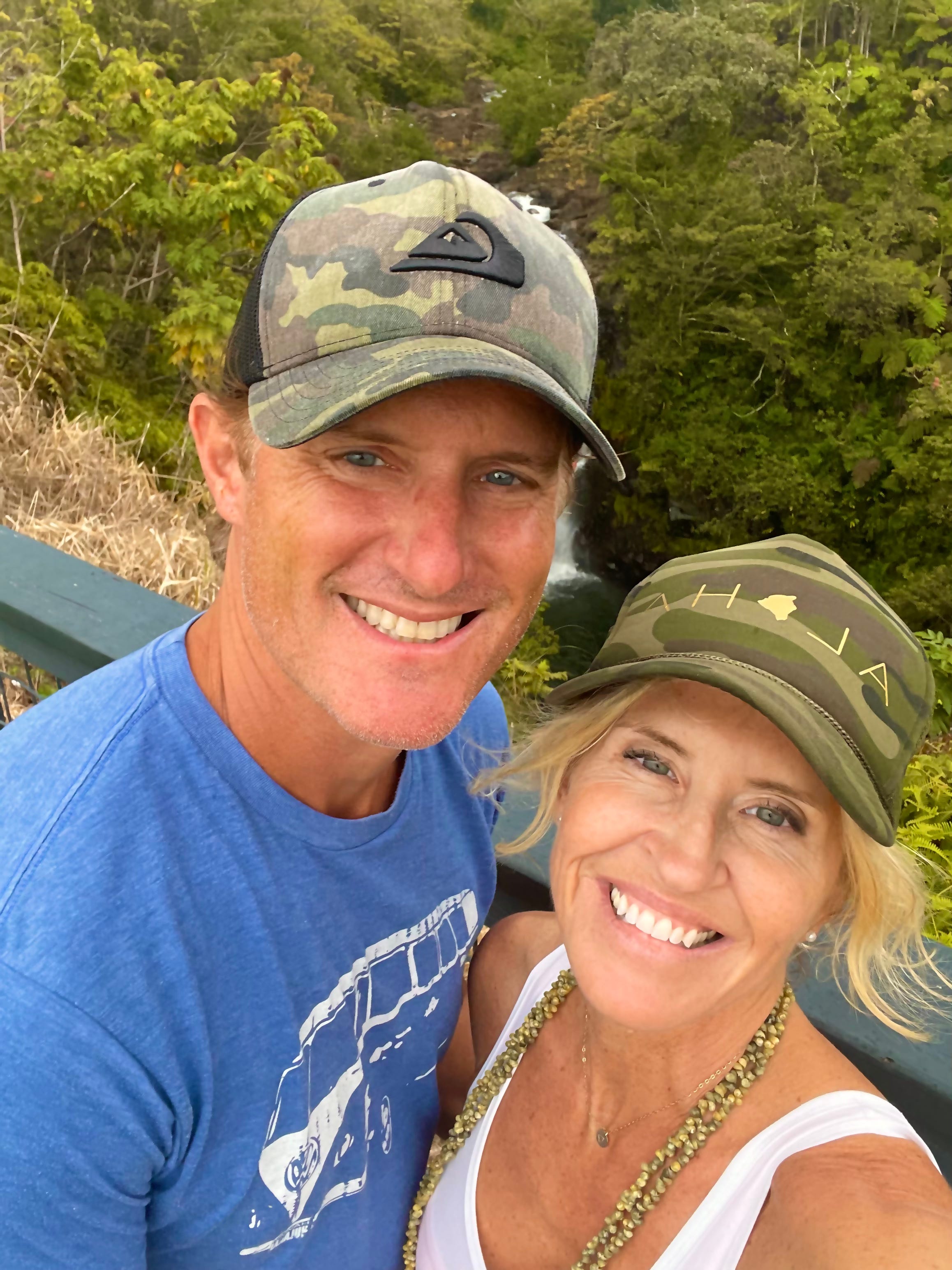
Hi, we’re Kristin & Travis - the voices behind Complex PTSD Warrior.
Our mission is to make Complex PTSD education and healing resources accessible worldwide. With 15,000+ hours devoted to Complex PTSD research, healing, and education, we combine relatable neuroscience and lived experience to spread global Complex PTSD awareness, trauma-informed tools, and practical support for survivors and their loved ones.📝 A Note on Our Format: You might notice we use frequent line breaks, bolding, and emojis. This is intentional. Trauma impacts cognitive processing, often making dense text feel overwhelming. We design our writing to be “nervous-system friendly”—easy to scan, absorb, and digest, even when you are in survival mode.
If this post resonated, please share it - it might be exactly what someone has been waiting their whole life to hear. 🌿
Disclaimer: The content shared here is for educational and informational purposes only and is not a substitute for professional mental health care, diagnosis, or treatment. Please go at your own pace, and always prioritize what feels safe for your body and nervous system. If you’re in crisis or need immediate support, please reach out to a licensed mental health provider or crisis resource in your area.
If you are a therapist, coach, or educator and wish to use this content with clients or students, please contact info@complexptsdwarrior.com for professional licensing options.
© 2026 Kristin Francis – Complex PTSD Warrior. All rights reserved.
This publication is licensed for individual, personal use only. It may not be reproduced, distributed, or transmitted in any form, shared with others, or used in professional practice without prior written permission from the author.